

Quick answer
Dive centers serving Nusa Penida operate daily from 07:00 to 20:00, with boat departures typically scheduled between 07:30 and 09:00 to catch calm morning conditions. Island entry costs 25,000 IDR per adult, separate from marine park fees collected by individual dive operators. Most two-dive packages depart from Sanur or Padangbai and return by early afternoon, covering sites like Manta Point, Crystal Bay, or SD Point depending on current and visibility.
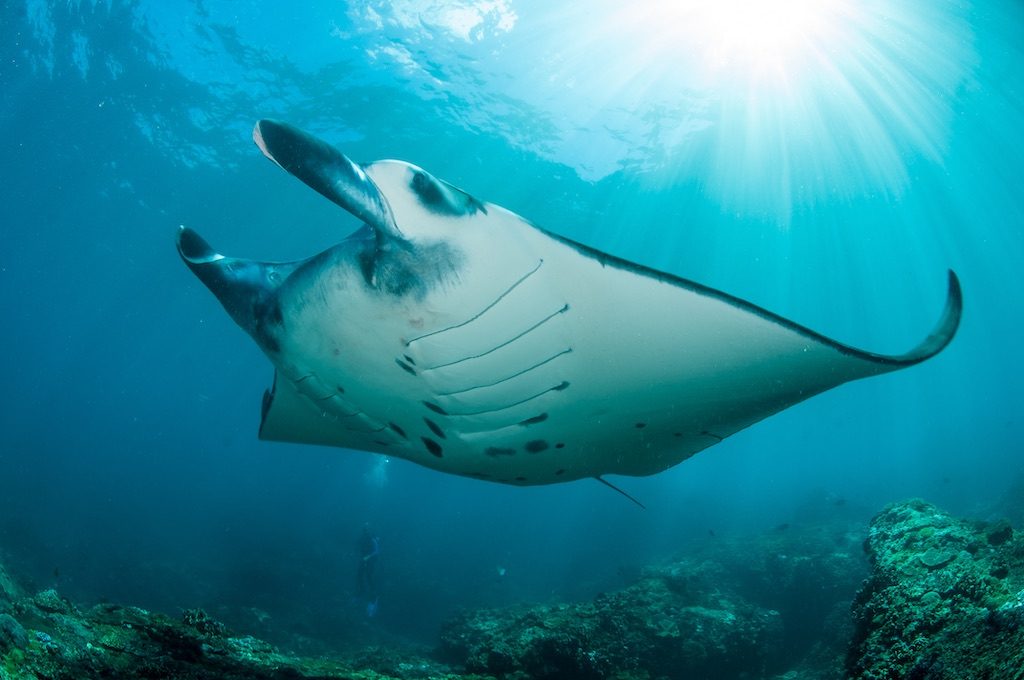
Nusa Penida dive sites register water temperatures between 18°C and 26°C year-round, colder than mainland Bali due to Indian Ocean upwellings that deliver nutrient-rich currents and the pelagic species divers travel for. Manta rays congregate at cleaning stations off the southwest coast from April through November, while mola mola—oceanic sunfish weighing up to 1,000 kilograms—arrive at Crystal Bay and surrounding sites during the austral winter months of July through October. Scuba diving Bali Nusa Penida requires coordination with operators who hold permits for the marine protected area and maintain relationships with local boat captains familiar with the island's exposed channels. Most dive centers operating Nusa Penida trips are based in Sanur, Padangbai, or directly on the island at Toyapakeh village, the main arrival harbor on the north coast. Operators collect clients before dawn for the 07:00–09:00 departure window, when wind chop and swell are lowest. Surface intervals between dives typically occur at Toyapakeh or on the boat, as few dive sites offer sheltered beach access. Drift diving dominates the experience here. Sites like Blue Corner and SD Point funnel strong currents through vertical walls that drop beyond recreational depth limits, demanding advanced buoyancy control and reef hook use during safety stops. Crystal Bay offers calmer conditions inside its protected cove, making it the fallback site when southern exposure sites are too rough. Visibility ranges from 10 meters during plankton blooms to 30 meters on clear days, with thermoclines creating sudden temperature drops of 6°C or more at depth. Booking two to three days ahead secures a spot during high season, though walk-in availability exists outside July–August and December–January peaks. Operators require proof of certification and logged dives—most set minimums of 30 dives or Advanced Open Water for exposed sites. Dive shops in the Toyapakeh area offer shorter transit times and immediate access to northern sites, while Sanur-based operators provide broader itineraries and English-speaking guides. The 25,000 IDR island entry fee applies regardless of operator, collected at the Toyapakeh harbor upon arrival.
“Thermoclines at Nusa Penida create sudden temperature drops of 6°C or more at depth, signaling the nutrient-rich upwellings that draw manta rays and mola mola to these channels.”
Best Time for Scuba Diving Bali Nusa Penida
The optimal window for scuba diving in Nusa Penida is during the dry season from April to October, specifically between 07:00 and 09:00 for the best sea conditions. This period balances favorable water visibility with lower risks of strong surges that often affect the region's dive sites.
April–October
ModerateDry, 26°C–29°C
Predictable currents and high visibility favor Manta Ray sightings.
November–March
LowRainy, 27°C–30°C
Expect higher rainfall and potential surface chop during the monsoon season.
Weekday mornings
Low—
Arriving at 07:00 avoids the surge of day-trip boat traffic from mainland Bali.
Verdict: The best time to dive is during the dry season months of April or October, specifically by arriving at the 07:00–09:00 window to ensure favorable sea conditions.
Operating Hours for Scuba Diving Bali Nusa Penida
Dive operations at Nusa Penida are open daily to facilitate morning departures and logistics. Staff are available throughout the week to assist with booking and equipment coordination.
| Monday | 07:00–20:00 | |
|---|---|---|
| Tuesday | 07:00–20:00 | |
| Wednesday | 07:00–20:00 | |
| Thursday | 07:00–20:00 | |
| Friday | 07:00–20:00 | |
| Saturday | 07:00–20:00 | |
| Sunday | 07:00–20:00 |
Entrance Fees and Costs for Scuba Diving Bali Nusa Penida
Visitors to Nusa Penida are subject to a mandatory island entry retribution fee. This cost is separate from any marine park fees or scuba diving service charges.
A typical adult pays 25,000 IDR for the mandatory island entry fee, with additional marine park fees varying by dive location.
Logistics and Transport for Scuba Diving Bali Nusa Penida
Nusa Penida is located southeast of mainland Bali, with most diving operations based in the Toyapakeh area. Reaching the island requires coordinating boat transfers from Sanur Harbor directly to the local landing points.
Fast boat from Sanur Harbor to Nusa Penida
Private car transfer to Sanur Harbor
Walk from local port arrival point to Toyapakeh
Essential Preparation for Scuba Diving Bali Nusa Penida
Nusa Penida's strong currents and deep drop-offs require advance preparation and valid certification before departure.
-
Confirm your PADI or SSI certification — Operators require proof of Open Water certification or equivalent for drift dives.
-
Book your dive slots in advance — Popular sites like Manta Point and Crystal Bay fill quickly, especially during manta season.
-
Arrange fast boat transfer to Nusa Penida — Dive operators typically include transport from Sanur or coordinate boat logistics.
-
Bring your certification card and logbook — Dive centers verify credentials and assess experience level before assigning dive sites.
-
Pack reef-safe sunscreen and rashguard — Chemical sunscreens damage coral; physical barriers offer better protection in strong sun.
-
Prepare 25,000 IDR cash for entry fee — Island retribution fee collected at Toyapakeh harbor upon arrival, separate from dive costs.
Check availability
Frequently asked questions about scuba diving bali nusa penida
Everything you need to know about scuba diving bali nusa penida