

Quick answer
Scuba diving training Bali takes place at centers in Sanur, Tulamben, Amed, and Padang Bai, with daily schedules from 08:00 to 18:00 and no entrance fee for shore-based training sites. A standard PADI Open Water course requires three to four days, beginning with confined-water skills in pools or shallow bays and progressing to four open-water certification dives at depths up to 18 meters. Morning sessions between 08:00 and 10:00 deliver the calmest conditions and clearest visibility.
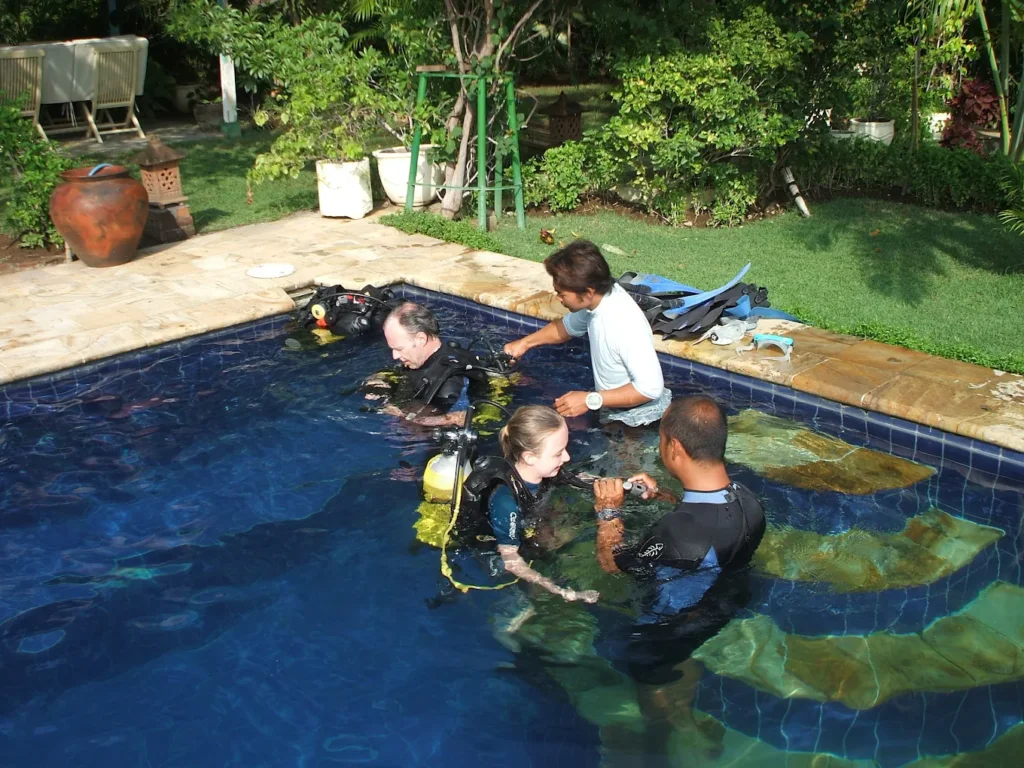
Bali certifies more recreational divers each year than any other Indonesian island, a distinction rooted in the combination of accessible shore entries, year-round warm water, and a dense network of multilingual instructors. The island's training infrastructure splits cleanly by coast: Sanur on the southeast offers sheltered sand-bottom sites suited to first pool-to-ocean transitions, while Tulamben and Amed on the northeast provide immediate access to walls, wrecks, and macro life that let newly certified divers log varied environments within the same trip. Padang Bai serves as the gateway to the advanced sites around Nusa Penida but remains a practical choice for core Open Water training thanks to protected inner-bay zones. Most scuba diving training in Bali follows PADI or SSI standards, with courses structured into knowledge development, confined-water skill sessions, and open-water dives. Entry-level Open Water certification typically spans three to four days: the first day covers theory modules and shallow-water skills such as regulator recovery, mask clearing, and buoyancy control, usually conducted in a pool or knee-deep bay. Days two and three move to open water for four certification dives, each adding depth and complexity until the final dive reaches the 18-meter recreational limit. Instructors maintain student-to-teacher ratios between two-to-one and four-to-one, tighter than the standards require, reflecting the competitive local market. Water temperature holds steady between 26°C and 29°C year-round, eliminating the need for thick neoprene but requiring attention to thermocline layers below 15 meters at sites like the USAT Liberty wreck. Visibility varies by season and location: Sanur averages 10 to 15 meters during the wet months from December through March, while Tulamben and Amed maintain 15 to 25 meters of visibility even during peak plankton blooms. Surface conditions matter more for training comfort than for experienced divers—morning departures before 10:00 avoid the afternoon onshore winds that roughen entries and exits at exposed sites. Many schools schedule confined-water sessions in late afternoon when pools are less crowded, then reserve mornings exclusively for open-water dives. Certification cards issued in Bali carry the same global recognition as those earned elsewhere, and dive logs from Indonesian sites count toward advanced ratings and specialty endorsements. The concentration of schools creates pricing tension that works in the learner's favor, but it also demands careful vetting: instructor credentials, equipment age, and insurance coverage vary, and the lowest-cost provider is rarely the safest choice.
“Bali certifies more recreational divers each year than any other Indonesian island, a distinction rooted in accessible shore entries and year-round warm water.”
Optimal Timing for Scuba Diving Training Bali
The best arrival window for scuba diving training in Bali is 08:00–10:00, as these morning hours provide the calmest water conditions and optimal visibility for instruction. Choosing the right season further enhances these conditions by minimizing rainfall and underwater surge.
Weekday mornings
Minimal—
These hours offer the most stable conditions and smallest groups for training sessions.
April to October
Low to moderateDry season, 26–28°C
The dry season features lower rainfall and clearer water, which is ideal for skill practice.
November to March
High during holidaysWet season, 27–30°C
Increased rainfall can reduce visibility, though morning sessions often remain viable for training.
Verdict: For the highest probability of clear conditions, plan your training between April and October and aim for an arrival window of 08:00–10:00.
Daily Schedule for Scuba Diving Training Bali
Scuba diving training facilities in Bali operate on a consistent daily schedule to accommodate various course requirements. These hours apply across our training locations, including Sanur, Tulamben, Amed, and Padang Bai.
| Monday | 08:00–18:00 | |
|---|---|---|
| Tuesday | 08:00–18:00 | |
| Wednesday | 08:00–18:00 | |
| Thursday | 08:00–18:00 | |
| Friday | 08:00–18:00 | |
| Saturday | 08:00–18:00 | |
| Sunday | 08:00–18:00 |
Costs and Fees for Scuba Diving Training Bali
There is no cost to enter the facility areas as access is free. Fees are only applicable when enrolling in specific professional dive courses or guided training programs.
Adults pay 0 IDR for entry, with total costs determined solely by the specific dive training course or program selected.
How to Begin Your Scuba Diving Training Bali Process
Enrolling in scuba diving training in Bali requires selecting a dive center, choosing your certification level, and completing registration. The process takes 15–30 minutes and can be done online or in person at locations in Sanur, Tulamben, Amed, or Padang Bai.
Research accredited dive centers
Compare PADI, SSI, or RAID-certified operators across Sanur, Tulamben, Amed, and Padang Bai. Many visitors overlook verifying instructor credentials and recent safety records before committing.
Select your certification course
Choose between Discover Scuba (beginner trial), Open Water (entry certification), or Advanced courses based on your experience. Beginners often skip the medical questionnaire requirement, which can delay start dates.
Contact the dive center directly
Reach out via their website or phone to confirm availability for your preferred dates. Walk-ins are accepted during operating hours (08:00–18:00 daily), but morning slots fill quickly during peak season.
Submit required documentation
Provide a completed medical form, passport copy, and any prior certification cards if upgrading. First-time divers frequently forget to disclose medical conditions that require physician clearance, causing last-minute rescheduling.
Confirm your training schedule
Finalize the multi-day itinerary, which typically spans 2–4 days depending on certification level. Most programs start with pool sessions before progressing to open-water dives at sites like Tulamben or Amed.
Arrange equipment fitting
Visit the center before your first session to be measured for wetsuit, BCD, and fins. Ill-fitting gear is the most common complaint among trainees and can be avoided with this preliminary step.
Accessing Scuba Diving Training Bali Sites
Scuba diving training in Bali takes place across several coastal regions including Sanur, Tulamben, Amed, and Padang Bai. Private transport or pre-arranged transfers are the standard methods for reaching these dive sites from Ngurah Rai International Airport.
Jalan Bypass Ngurah Rai to Sanur
Jalan Raya Tulamben from Denpasar
Jalan Raya Padang Bai
Jalan Raya Amed via Karangasem
Preparation Checklist for Scuba Diving Training Bali
Proper preparation ensures a safe and productive training experience in Bali's waters.
-
Complete the medical questionnaire honestly — Your instructor needs accurate health information to assess fitness for diving and identify any conditions requiring medical clearance.
-
Bring a valid photo ID or passport — Required for course registration and certification processing with international dive agencies.
-
Pack or rent a swimsuit and towel — You'll wear a swimsuit under your wetsuit and need a towel after water sessions.
-
Arrange transportation to your training location — Dive sites in Sanur, Tulamben, Amed, and Padang Bai require advance planning for morning arrivals.
-
Get adequate sleep the night before — Diving requires focus and physical stamina throughout multi-hour training sessions.
-
Eat a light meal before arrival — Training begins at 08:00 and you'll need energy without feeling overly full during water activities.
-
Confirm your booking and course schedule — Verify your start time, location, and any specific requirements with your dive center beforehand.
Check availability
Frequently asked questions about scuba diving training bali
Everything you need to know about scuba diving training bali