

Quick answer
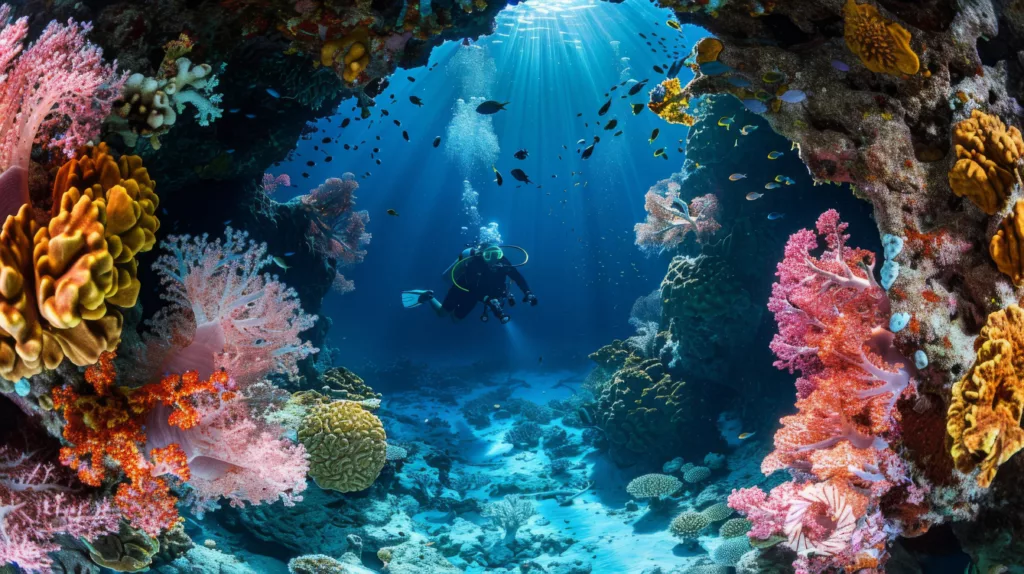
The best diving time Bali spans May through October, when the dry season delivers visibility often exceeding 30 meters and calm surface conditions across most sites. November through April brings the northwest monsoon, reducing visibility to 10–15 meters in many areas and stirring up sediment, though southern sites like Nusa Penida remain diveable with proper planning. Peak months are July through September, when water temperature stabilizes around 26–28°C and manta ray sightings reach their highest frequency.
Bali sits at the confluence of the Indian Ocean and the Flores Sea, a position that subjects its dive sites to two competing monsoon systems each year. The resulting seasonal split is not merely academic—it determines whether you descend into gin-clear water or navigate a particulate haze, whether surface intervals happen on flat seas or pitching swells. The dry season, running May to October, establishes the island's reputation. Southeast trade winds push nutrient-poor oceanic water into the straits, flushing out sediment and stabilizing thermoclines. Visibility at sites like Tulamben and Amed routinely stretches past 25 meters, and the USAT Liberty wreck reveals itself in full profile from a single vantage. Surface conditions flatten, allowing safe access to exposed sites along the northeast coast. Water temperature hovers in a comfortable 26–28°C band, eliminating the need for thick neoprene. This window also aligns with manta ray migrations at Manta Point and Nusa Penida, where cleaning stations see daily visitors from July onward. The northwest monsoon, dominating November through April, reverses the pattern. Rainfall increases tenfold in some coastal zones, and runoff clouds inshore reefs. Visibility drops to 10–15 meters at northern sites, and surge becomes frequent along west-facing walls. Yet this period is not a write-off. Southern sites—particularly around the Nusa islands—lie in a rain shadow and maintain acceptable conditions. Mola mola, the oceanic sunfish, appear at cleaning stations from late July through October, drawing divers willing to tolerate cooler upwellings. Advanced divers targeting pelagics often prefer the monsoon months, when nutrient influx draws larger schools. Transition months—April, May, October, November—present variable conditions. A single week can deliver both crystal visibility and milky water as weather systems oscillate. Operators adjust site selection daily, favoring sheltered bays when swells build. For divers with fixed travel dates in these windows, flexibility matters more than any forecast.
“Bali sits at the confluence of the Indian Ocean and the Flores Sea, a position that subjects its dive sites to two competing monsoon systems each year.”
Operating Hours for Best Diving Time Bali Logistics
Diving access in Bali remains available at all hours, though specific underwater activities depend entirely on the schedules of private diving operators. Visitors should coordinate their dive plans directly with their chosen service provider.
| Monday | 00:00–23:59 | |
|---|---|---|
| Tuesday | 00:00–23:59 | |
| Wednesday | 00:00–23:59 | |
| Thursday | 00:00–23:59 | |
| Friday | 00:00–23:59 | |
| Saturday | 00:00–23:59 | |
| Sunday | 00:00–23:59 |
Entrance Fees and Diving Cost Expectations for Best Diving Time Bali
There is no central gate fee to access diving sites in Bali. Total costs depend entirely on the private dive operator services selected for equipment, guidance, and boat transport.
Divers pay 0 IDR for site access, with final costs determined solely by the private operator packages booked.
Getting to the Best Diving Time Bali Locations
Bali serves as the central hub for regional diving, with primary access points located in Tulamben, Padang Bai, and Nusa Penida. Travelers typically reach these coastal departure points via private vehicle or pre-arranged transport from Ngurah Rai International Airport.
Jalan Raya Tulamben to USAT Liberty wreck
Jalan Raya Padang Bai to Blue Lagoon
Sanur Beach harbor to Nusa Penida
Checklist for Planning Your Best Diving Time Bali Trip
Prepare these essentials before booking your Bali dive operator to ensure a smooth trip during the best diving season.
-
Verify your dive certification is current — Most operators require PADI Open Water or equivalent with proof of certification.
-
Arrange dive insurance coverage — Medical evacuation and hyperbaric treatment in remote sites can exceed $50,000 without coverage.
-
Book your operator 2–4 weeks ahead — May–October slots fill quickly as visibility peaks and seas calm.
-
Confirm your booking 48 hours before — Operators adjust schedules based on weather and need accurate headcounts.
-
Pack your certification card and logbook — Operators verify credentials before allowing you on the boat.
-
Bring reef-safe sunscreen — Chemical sunscreens damage Bali's coral; choose mineral-based alternatives.
-
Arrive at meeting points by 08:00 — Morning departures catch the best visibility before afternoon currents strengthen.
Check availability
Frequently Asked Questions About Best Diving Time Bali
Everything you need to know about best diving time bali